2026 Top Hitachi Excavator Models for Global Buyers?
Global buyers entering 2026 need more than a familiar brand name. They need measurable productivity, dependable parts support, and operating costs that remain manageable across changing job sites. A Hitachi Excavator can meet these expectations, but the right model depends on terrain, material, fleet size, and local service capacity. A compact machine may suit urban utilities, while a large mining excavator demands different hydraulic performance, transport planning, and maintenance expertise.
Recent industry reports support this practical view. The KHL Yellow Table continues to show strong competition among global construction equipment manufacturers, reflecting the importance of product scale and dealer networks. Off-Highway Research also highlights replacement demand, infrastructure investment, rental activity, and emissions requirements as major forces shaping equipment purchases. Hitachi Construction Machinery’s annual reports provide further evidence of its focus on excavator technology, lifecycle support, digital monitoring, and regional market adaptation. These sources offer useful direction, but they do not replace job-site testing.
Conditions vary sharply.
A model performing efficiently in Europe may face different fuel, climate, or attachment demands in Southeast Asia, Africa, or Latin America. Buyers should compare rated operating weight, bucket capacity, fuel consumption, cycle time, hydraulic flow, cab visibility, and telematics functions. Service response matters just as much. One overlooked filter delay can stop an entire work crew.
This 2026 guide examines leading Hitachi Excavator models for global buyers, including their practical strengths, limitations, and best-fit applications. Some rankings remain debatable. That is intentional. Price, productivity, resale value, and dealer support must be judged together, not separately.
Define 2026 Hitachi Excavator Classes by Operating Weight and Power [Hitachi Specs]
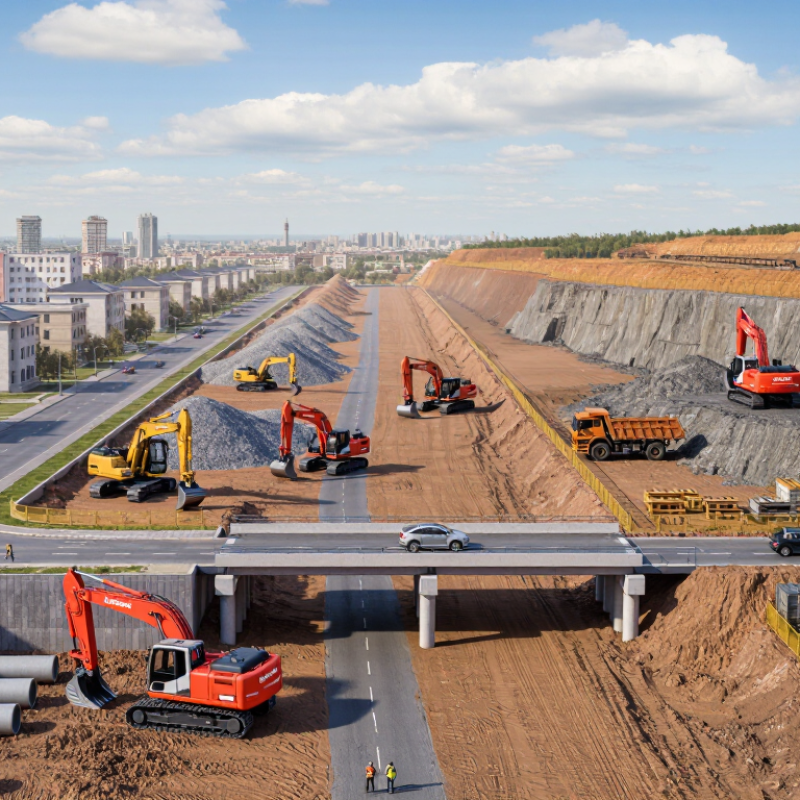
In 2026, global buyers should classify crawler excavators by operating weight and net power, not model labels. This approach supports clearer comparisons across regions, attachments, transport rules, and site conditions. Off-Highway Research’s 2024 Global Construction Equipment Markets report tracks continuing demand across compact, mid-sized, and heavy excavator segments. Its market segmentation aligns with common field practice.
Weight sets the first boundary. Compact units, roughly 1.5–6 tonnes and 15–45 kW, suit utility trenches, landscaping, and restricted urban access.
Mid-range machines, about 6–25 tonnes and 45–140 kW, handle drainage, roadwork, and general excavation.
Heavy classes above 25 tonnes often deliver 140–400 kW for quarrying, deep foundations, and high-volume earthmoving.
These are practical ranges, not universal standards.
AEM market data for 2024 shows equipment demand remains sensitive to infrastructure investment, interest rates, and replacement cycles. Buyers should compare net power, hydraulic flow, bucket capacity, ground pressure, and rated lift together. A heavier machine can lose productivity on weak soil. A powerful engine cannot fix poor attachment matching. Field trials matter. Published power figures can mislead when auxiliary flow is ignored. That detail deserves more attention in 2026 purchasing reviews. Reported fuel efficiency also varies with operator habits and duty cycle. Verify every figure against the current technical sheet and local certification requirements.
Compare ZX130-7 and ZX210-7 Using ISO 6015 Performance Metrics
For 2026 global buyers, the ZX130-7 and ZX210-7 should be compared through verified ISO 6015 lift-capacity procedures, not brochure impressions. ISO 6015 evaluates how a hydraulic excavator handles suspended loads at defined working radii and positions. Test results reflect hydraulic power, machine stability, and the risk of tipping. The ZX130-7 suits restricted sites, utility work, and lighter lifting tasks. Its smaller footprint can improve access on narrow roads and crowded foundations. The ZX210-7 offers a heavier operating platform and greater lifting potential, especially when the load remains close to the machine. Actual capacity changes with boom length, arm selection, counterweight, bucket, and ground conditions.
Field experience shows that radius matters more than many buyers expect. A load lifted near the machine may be acceptable, while the same load becomes unsafe after a small swing outward. Measure front and side capacities separately. Check rated loads at realistic heights, not only ideal test positions. Also compare hydraulic cycle time, stability margins, and transport weight. These details affect daily output more than maximum power alone. Some numbers still need skepticism.
A practical evaluation should record the load, radius, attachment, and surface condition during each trial. The ZX130-7 may reduce transport costs and simplify site movement. The ZX210-7 may deliver stronger production on deep excavation and heavier pipe placement. However, a larger machine is not automatically more efficient. Operator skill, maintenance condition, and local lifting rules can change the result. Buyers should request complete test conditions before comparing ISO 6015 figures across suppliers.
2026 Top Hitachi Excavator Models for Global Buyers? — Compare ZX130-7 and ZX210-7 Using ISO 6015 Performance Metrics
| Performance dimension |
ZX130-7 |
ZX210-7 |
Buyer relevance |
| Operating mass |
13,900 kg |
21,600 kg |
Transport planning, ground pressure, and lifting stability |
| Rated engine power |
74.9 kW at 2,000 rpm |
128.4 kW at 2,000 rpm |
Available power for digging, travel, and auxiliary work |
| Nominal bucket capacity |
0.52 m³ |
0.91 m³ |
Material volume per cycle; actual capacity varies by bucket type |
| Maximum digging depth |
6,060 mm |
6,670 mm |
Trenching, basement excavation, and foundation work |
| Maximum digging reach |
8,980 mm |
9,920 mm |
Working envelope and truck-loading flexibility |
| Maximum bucket digging force |
Approximately 95 kN |
Approximately 151 kN |
Penetration force in compacted soil and broken ground |
| Maximum arm crowd force |
Approximately 65 kN |
Approximately 98 kN |
Arm breakout performance during trenching and loading |
| Typical transport width |
Approximately 2,590 mm |
Approximately 2,990 mm |
Road permits, trailer selection, and site access |
| ISO 6015 lift-test reference |
Rated lift must be established for the selected boom, arm, bucket, counterweight, track width, and lift radius |
Rated lift must be established for the selected boom, arm, bucket, counterweight, track width, and lift radius |
Use the ISO 6015 test method and the configuration-specific lift chart |
| ISO 6015 stability factors to review |
Forward tipping, lateral tipping, hydraulic limit, and working radius |
Forward tipping, lateral tipping, hydraulic limit, and working radius |
Compare the lowest permissible load at each stated radius |
| Best-fit application profile |
Utilities, road maintenance, urban excavation, and general earthmoving |
Heavy earthmoving, quarry support, infrastructure, and high-volume loading |
Choose according to payload, access limits, and required production rate |
Technical note: ISO 6015 rated lift capacity is not a single fixed machine value. It changes with boom and arm configuration, attachment mass, counterweight, track arrangement, lift radius, ground condition, and hydraulic limits. The figures above are general published specification values; final lifting decisions should use the configuration-specific rated-lift chart and the applicable local safety requirements.
Assess ZX690LCR-7 Mining Capacity, Fuel Efficiency, and Emissions Data
2026 Top Excavator Models for Global Buyers: ZX690LCR-7 Mining Capacity, Fuel Efficiency, and Emissions
The ZX690LCR-7 sits in the 70-ton excavator class, where productivity depends on bucket volume, fill factor, cycle time, and site access. A practical mine test should record tonnes per operating hour, not only advertised digging force. For example, a 4.0 m³ bucket, 85% fill, 1.8 tonnes/m³ material, and a 35-second cycle could approach 525 tonnes per hour under ideal conditions. Real output will fall with blasting debris, long swings, and operator pauses. That gap matters.
Fuel data needs equal caution. Public specifications may not show fuel use under identical loads. IPCC 2006 Guidelines place diesel emissions near 2.6–2.7 kg of CO2 per litre, depending on fuel properties. The US EPA NONROAD model also stresses duty cycle, engine load, and operating hours when estimating non-road emissions. A mine burning 45 litres hourly could therefore produce roughly 117–122 kg of CO2 hourly. This is an estimate, not a certification. The weak point is obvious: dusty, uphill cycles rarely match laboratory assumptions.
Tips: Measure litres per productive tonne for two weeks. Separate digging, idling, and waiting time. Check exhaust-treatment status, ambient temperature, and haul-road slope. Compare the ZX690LCR-7 against site records, not brochure figures. Small errors in bucket fill can distort capacity and fuel results. Recheck the calculation.
Match Global Buyers with Hitachi Models Using TCO and CE/EPA Standards
For global buyers in 2026, excavator selection should begin with application, not catalog popularity. A 20-ton crawler excavator may suit roadwork, drainage, and general construction. A compact model fits urban sites with narrow access. Heavy quarry work demands stronger structures, larger hydraulic capacity, and stable undercarriages.
Total cost of ownership reveals the better match. Compare purchase price, fuel use, scheduled maintenance, transport, attachments, and expected resale value. A machine using one extra liter of fuel per hour can create a serious annual difference. Track downtime, too. A low-priced excavator becomes expensive when parts arrive slowly or technicians lack training. These figures need local verification.
Compliance also changes the shortlist. CE requirements support market access in the European Economic Area, while EPA emissions rules apply to relevant United States applications. Buyers should check engine certificates, emissions labels, technical files, and conformity documents before shipment. Regional fuel quality matters. So does site altitude.
Do not rely on brochures alone. Request operating-hour records, service intervals, hydraulic test results, and cold-start evidence. Ask dealers how quickly common filters and seals can arrive. Some forecasts will be wrong. Actual fuel consumption depends on soil, operator habits, and idle time. A trial under real site conditions remains the most reliable comparison.

 Wheel Loader
 Excavator
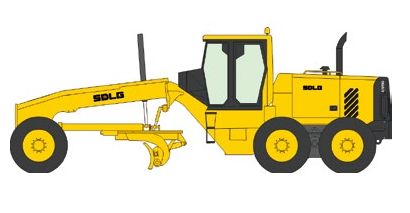 Motor Grader
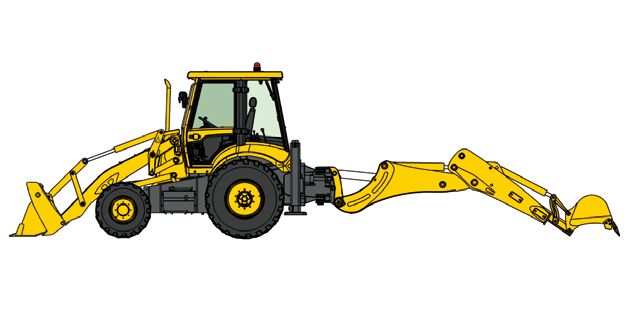 Backhoe Loader
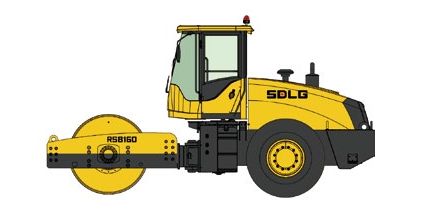 Road Roller
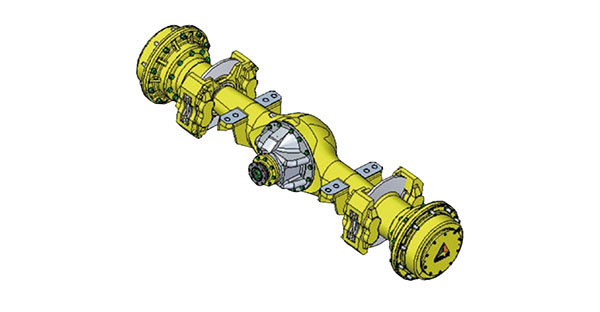 Spare Parts