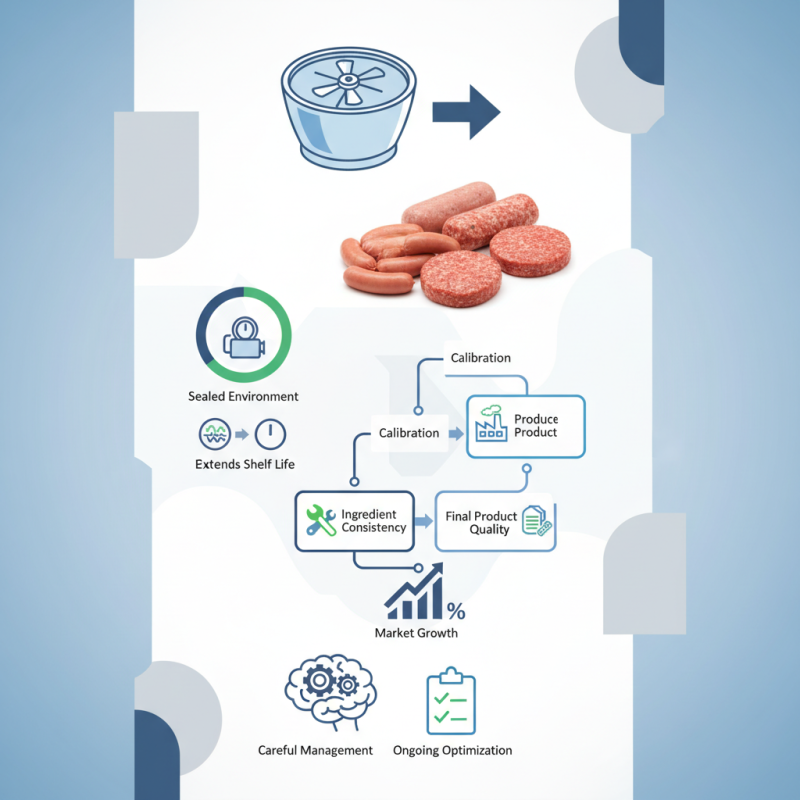
What is a Vacuum Bowl Cutter and How Does It Work?
The vacuum bowl cutter is an essential tool in food production. This device enhances the quality of processed meats and helps in creating consistent products. According to industry reports, the global vacuum bowl cutter market is projected to grow by 5% annually, reflecting its importance.
A vacuum bowl cutter operates by creating a sealed environment to minimize air exposure during mixing. This process preserves flavors and extends shelf life. Yet, some users struggle with maintaining optimal vacuum pressure. Proper calibration is crucial for achieving the best results. Users must also consider the cutter's capacity concerning their production needs.
Quality control can be challenging in large operations. Variations in ingredients affect final texture and taste. Understanding these factors can help improve product consistency. Overall, investing in a vacuum bowl cutter may lead to significant benefits but requires careful management and ongoing reflection.
What is a Vacuum Bowl Cutter?
A vacuum bowl cutter is a specialized kitchen tool used primarily in meat processing. It blends, chops, and emulsifies ingredients in a sealed environment. This method retains moisture and enhances texture. Ideally, it serves both commercial and artisanal food preparations.
The device features a bowl that locks into place. A vacuum is created to remove air, leading to a unique consistency. It operates quietly, making it excellent for a range of kitchens. You can create smooth pastes or finely chopped mixtures with ease. But, it may require practice to master the right processing time.
Tips: Always start with cold ingredients. This helps maintain the desired temperature and prevents unwanted changes. Experiment with different speeds for various textures. You might find some mixtures require longer time than expected. Don't rush the process; good results often take time. Be prepared to adjust your technique based on the consistency you want.
Key Components of a Vacuum Bowl Cutter
A vacuum bowl cutter is an essential tool in food processing. It is designed to mix and chop ingredients efficiently while removing air from the bowl. This helps in preserving flavors and textures during the mixing process. Key components play a crucial role in achieving these benefits.
The main component of a vacuum bowl cutter is the cutting blade. It can be sharp or blunt, depending on the desired texture. The blades rotate at high speed, making it easier to chop ingredients uniformly. The bowl is also vital. It is typically made from stainless steel for durability and easy cleaning. An airtight seal is crucial, as it maintains the vacuum.
Another key part is the vacuum pump. It extracts air from the bowl, creating a vacuum environment. This step is critical because it reduces oxidation. Reduced oxidation helps to maintain color and freshness. However, sometimes the pump can fail or create leaks. This can lead to inconsistent results, which is a common issue in many kitchens. Ensuring these components work well together is essential but often overlooked.
Principle of Operation in Vacuum Bowl Cutters
Vacuum bowl cutters are innovative machines used primarily in food processing. Their main function is to chop, mix, and emulsify ingredients safely and efficiently. The operation principle of vacuum bowl cutters revolves around creating a controlled environment that reduces air exposure. This is essential when preparing mixtures sensitive to oxidation, ensuring the final product retains its flavor and color.
In a vacuum bowl cutter, the ingredients are placed in a sealed bowl. A powerful motor drives sharp blades, chopping the ingredients rapidly. The vacuum feature removes air from the bowl during this process. This reduction in air is critical because it prevents unwanted oxidation. As the blades spin, they create a blend that reacts differently compared to traditional mixers. The viscosity changes, and the texture becomes smoother.
Using these cutters is not without challenges. Maintaining the vacuum seal can be tricky, requiring constant monitoring. Additionally, the initial investment in such technology can be daunting for small producers. Operators must also have a good understanding of the settings, as improper use can lead to inconsistent results. Perfecting the technique takes time and practice.
Applications in Food Processing and Beyond
A vacuum bowl cutter is a versatile piece of equipment used mainly in food processing. This tool efficiently blends and cuts various ingredients, ensuring consistency in texture. It's not limited to just meat products. You can also use it for vegetables, cheeses, and even dough. The vacuum feature minimizes oxidation, preserving flavors and colors. This process can be fascinating and helpful in culinary applications.
In addition to food processing, vacuum bowl cutters find applications in other industries. They are useful in producing cosmetics and pharmaceuticals. The ability to create a homogeneous mixture is crucial in these fields. For example, blending essential oils with other ingredients requires precision.
However, not every batch turns out perfect. Sometimes, the ratios can be off, leading to a less-than-ideal product. Monitoring the process closely often reveals areas for improvement. This consistent practice fosters a better understanding of blending techniques and ingredient interactions.
When using a vacuum bowl cutter, operators must be attentive. The mixing times and heat production can vary. If neglected, final products may need additional refinement. Experimenting with timing and ingredient placement can lead to better results. Each use offers a chance to refine skills and methods, making every session an opportunity for learning.
Advantages of Using a Vacuum Bowl Cutter
The vacuum bowl cutter is an innovative tool in food processing. It effectively combines and emulsifies ingredients while significantly reducing air inclusion. This leads to better product stability and texture. The ability to control the vacuum level and optimize processing times enhances product quality.
Using a vacuum bowl cutter has considerable advantages. It helps maintain the flavor and freshness of ingredients. A study from the Food Science and Technology journal reveals that vacuum processing preserves up to 30% more volatile compounds in herbs. This means better tasting food products. Additionally, the cutter minimizes oxidation, preventing spoilage and extending shelf life.
When using a vacuum bowl cutter, remember to monitor processing times closely. Over-mixing can lead to a less desirable texture. Adjusting vacuum levels for different ingredients can yield better results. Aim for a balance to avoid unnecessary adjustments in your recipe. Keep experimenting to find the perfect technique that suits your needs!
Advantages of Using a Vacuum Bowl Cutter

 Wheel Loader
  Excavator
  Motor Grader
  Backhoe Loader
  Road Roller
  Spare Parts